- DK NEJET
We’re Going to Paris for Eurosatory 2026

Next week, part of the DK NEJET team will be at Paris-Nord Villepinte for Eurosatory 2026, the world’s largest land and air-land defence exhibition.
The scale keeps getting bigger and bigger every year, and it has been going on for 59 years now. This year’s event will gather more than 2,200 exhibitors from 65 countries, over 330 official delegations, and upwards of 100,000 professionals across five days.
The defence establishment doesn’t come to Villepinte to look at equipment it could see in a brochure. Instead, they come for the conversations that happen off the floor in the delegation meetings, the bilateral rooms, the quiet sessions where procurement officials and programme managers work out what the next decade of European capability is actually going to consist of.
Over the past two years, the substance of those conversations has shifted in a way the exhibition hall hasn’t fully caught up with. The hall is still full of hardware while the rooms are increasingly full of questions about everything that sits above the hardware – and that’s where the DK NEJET team comes in.
The dominating topics
Global military expenditure rose 9.4% in 2024, the sharpest single-year increase since the Cold War, and European rearmament has accelerated on the recognition that defence industrial capacity has been underbuilt for decades.
In February 2026, the European Commission adopted its Action Plan on Drones and Counter-Drones, extending EU security frameworks across unmanned operational domains for the first time.
The themes dominating this year’s edition — counter-UAS architectures, swarm management, EW-resilient autonomous systems, networked battlefield coordination — are not adjacent to what we build. That’s exactly what we have been developing and field-testing under real operational conditions since 2022, which means the market is now arriving at a conversation we’ve been having for four years.
What will we bring
Most of the exhibitors at Eurosatory will be showing platforms: systems that fly, drive, or fire. We’re bringing a different argument, and it’s one the room is increasingly primed to hear. A single operator working through our coordination layer can command dozens of autonomous systems at once across a software-defined architecture — non-GPS navigation, EW resilience, swarm intelligence, and target locking inside a single platform built for the electromagnetic environments where modern conflict actually takes place.
The reason that matters to a procurement official isn’t the technology for its own sake; it’s what it does to the economics of a defence budget. Legacy systems let one operator run two or three missions an hour. Ours enables thirty to forty. When a single frontline unit using our technology neutralised $6.1M in targets in 2025 at roughly fifteen times cost leverage, that wasn’t an incremental gain over the old model — it was a different model. That shift, from counting platforms to measuring what a coordinated system can actually accomplish per operator and per dollar, is exactly the recalculation buyers are starting to make.
What will we be doing there
We’re taking part in the Latvian national stand alongside fellow members of the Latvian Security and Defence Industries Federation (DAIF), where we’ll be showing two systems: the NIKNS SUNS 3 high-speed interceptor and the 10″ Pastnieks strike platform. Around that, our focus is on substantive meetings with procurement officials, institutional partners, and NATO-aligned organisations — the people shaping the architecture of European defence for the next decade.
Our three-country footprint is itself part of the argument. Combat experience and frontline iteration come from Ukraine, manufacturing and NATO codification from Latvia, logistics and scalability from Norway. That structure isn’t an accident of where we happened to grow; it’s a model for how distributed, interoperable European defence capability can be built around real operational feedback rather than procurement cycles measured in years.
In a room full of people who have just spent five days looking at the hardware problem, that story tends to resonate with the ones who are starting to ask what sits above it.
The bigger picture
We’re a profitable, pre-IPO group with a €65M pre-money valuation and a €10M investment round on the table. Eurosatory isn’t a fundraising event for us, and we won’t treat it as one. But the relationships built in these rooms with ministries, primes, and alliance programme offices are the ones that determine the shape of the next phase of growth.
The technology is currently scaling faster than the doctrine around it, and the countries and organisations that close that gap first will hold a disproportionate advantage. We’re in Paris to keep building the partnerships that make closing it possible.
We’ll share more from the ground next week.
The Next Decade’s Best Bet: Why Defense Tech Is the New Software
DK NEJET in Oslo – We’re Exhibiting at FSi Exhibition 2026
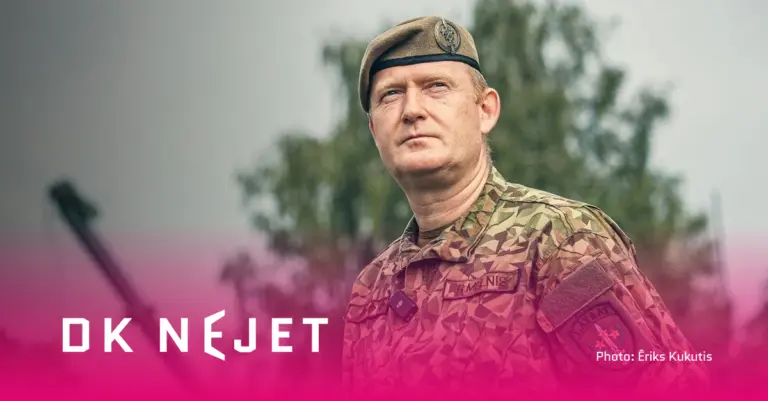
DK NEJET Group Hosts Latvian Minister of Defence

The Illusion of a Magic Button: Why Autonomy Alone Won’t Change the Battlefield