Ten years ago, “precision strike” meant a million‑dollar missile guided by a handful of satellites. Today, it can mean a swarm of cheap FPV drones, steered by a single AI‑driven operator. Europe is racing to scale this new kind of defense—and the companies that own the swarm‑control brain, not just the airframes, are quietly becoming the most interesting bets in the sector.
The rise of the FPV‑drone swarm
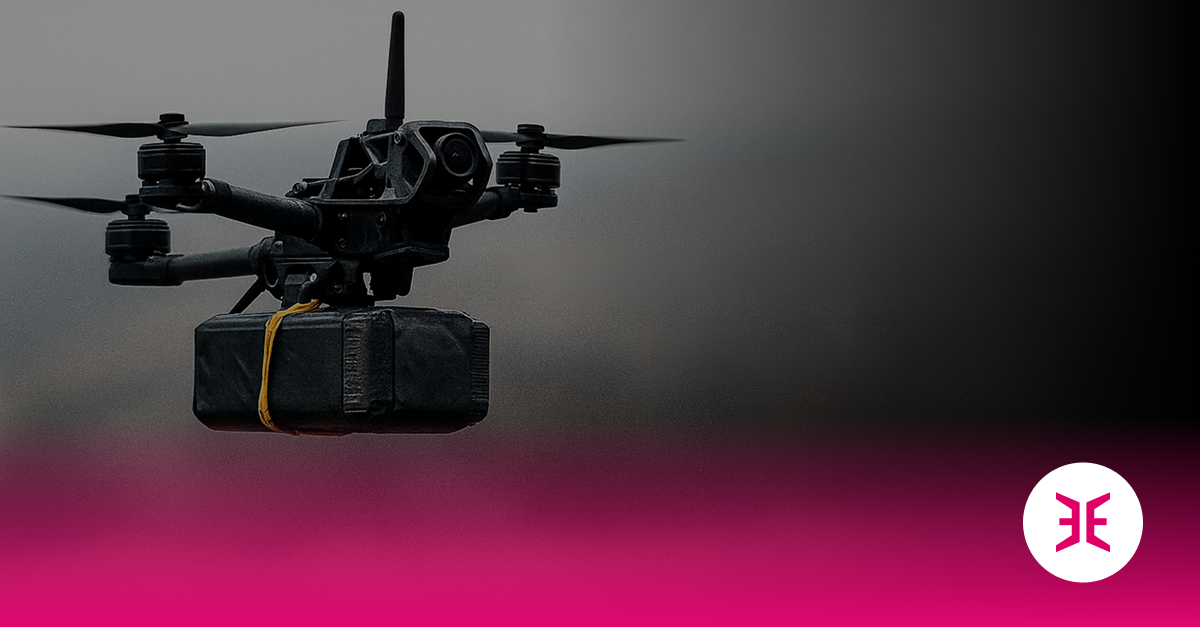
FPV drones have become the “people’s precision weapon”: cheap to build, easy to mass‑produce, yet capable of striking high‑value targets with surgical accuracy when guided properly. In Ukraine, FM‑based signal‑seeking routines and community‑driven innovation have allowed FPV‑drone swarms to target artillery, radar, and air‑defense nodes at scale, forcing European militaries to rethink how they defend bases, convoys, and airfields.
The lesson is clear: if an adversary can put hundreds of cheap FPVs in the sky, traditional air defenses optimized for jets or cruise missiles become blunt tools. This is why Europe is now racing to build not just more drones, but smarter, networked drone ecosystems—from swarm‑level coordination down to autonomous interceptors that can meet incoming FPV salvos mid‑air.
Towards that goal, Ukrainian‑Latvian defense‑tech startup DK Nejet has recently launched SwarmBRAIN MVP, an early swarm‑control stack that lets a single operator manage up to 33 air‑to‑ground FPV drones at once, illustrating how quickly the jump from “one drone, one pilot” to “one operator, one swarm” is moving from experiment to battlefield‑ready reality.
From one‑drone, one‑pilot to one operator, one swarm
The old model is simple: one pilot, one drone, one mission. The new model is more complex: one operator, a small drone inventory, and a swarm‑intelligence layer that distributes tasks, reacts to threats, and preserves the mission even when individual platforms are lost.
Projects like the European Defence Fund–backed ALTISS (“Highly Automated Swarm of Affordable ISR Long‑Endurance UAVs for Force Protection”) show how far this logic has advanced. ALTISS’ consortium, led by French SME Magellium and partners in Belgium and Slovenia, has built a system that allows a single operator to oversee a swarm of ISR (intelligence, surveillance, reconnaissance) drones, with AI handling automatic event detection, task allocation, and communication among platforms.
The same thinking is now spilling into the FPV‑drone domain:
- Atreyd’s “Drone Wall” in France uses AI‑coordinated FPV‑drone interceptors to form a flying shield against incoming loitering munitions and mass‑drone attacks.
- Across Eastern and Central Europe, SMEs and startups are experimenting with swarms that can autonomously patrol, detect, and engage threats while keeping the human operator in the loop for escalation decisions. DK NEJET is among those companies that recently launched its SwarmBRAIN MVP.
From an investor’s point of view, the story is no longer about individual drone models; it is about who owns the swarm‑control stack and how tightly that software is integrated into existing NATO‑style C4ISR environments.
Europe’s growing FPV‑drone industrial base
Europe is slowly moving from a fragmented, ad‑hoc FPV‑drone market to something closer to an industrial‑scale ecosystem. Several countries are setting up dedicated FPV‑drone factories, supply‑chain networks, and regulatory frameworks, under pressure from both Ukraine‑driven demand and NATO‑level planning cycles.
At the same time, defense‑tech firms are specializing in different layers:
- Airframe and propulsion companies that can mass‑produce rugged FPV platforms compatible with modular payloads.
- Counter‑drone and interceptor developers, whose turrets use AI‑assisted tracking and net‑launching systems to neutralize FPV drones before they impact protected assets.
- Underwater‑swarm and naval‑drone projects like the European Defence Agency’s SABUVIS, which apply the same swarm logic to fleets of autonomous underwater vehicles for mine‑countermeasure and seabed‑warfare missions.
This fragmentation is both a risk and an opportunity for investors: while there is no single “FPV monopoly,” there are clear niches where companies can capture defensible IP in AI‑driven control, sensor fusion, or niche interception methods.
What this means for investors in Europe
For investors tracking the European defense‑tech space, FPV‑drone and swarm‑intelligence markets offer a rare mix of short‑term demand and long‑term platform potential. Rather than betting on a single hardware vendor, it is more strategic to think in layers:
- Swarm‑control and AI platforms
- Companies building AI‑driven C2 systems that plug into NATO‑style command‑and‑control suites (for example, integrations with SitaWare or similar national C4ISR environments).
- Firms that can demonstrate autonomous behaviors at scale—adaptive tasking, resilient communication, and GPS‑denied operation—are likely to be first‑choice partners in multi‑national programs.
- FPV‑drone primes and SME manufacturers
- European airframe and propulsion specialists that can scale FPV‑drone production while maintaining reliability and export eligibility.
- SMEs with combat‑tested platforms or those embedded in European Defence Fund or NATO‑linked innovation programs, which reduce technology risk and accelerate procurement paths.
- Autonomous interceptors and counter‑drone tech
- Developers of AI‑driven interceptor swarms that can detect, track, and neutralize FPV drones with minimal human input.
- Hard‑plus‑software vendors offering interceptors, turrets, or RF‑based effectors that can be layered into existing air‑defense and base‑protection architectures.
- Enablers: sensors, EW, and software
- Radar, EO/IR, and radio‑frequency detection systems that feed into swarm‑control and counter‑drone stacks.
- Cyber/EW companies that specialize in jamming, spoofing, and signal‑intelligence tuned to FPV‑drone frequencies and swarm‑control protocols.
Why Europe is a strategic place to watch
Europe offers a relatively stable regulatory and export‑control environment compared with conflict zones, yet it faces intense near‑term pressure to modernize its drone and counter‑drone capabilities. Brussels is pouring money into projects like SME‑led swarm initiatives, explicitly tying them to “strategic autonomy” and reducing dependence on non‑European suppliers.
At the same time, European governments are sensitive to retaining sovereign control over AI and swarm‑control software, which tends to favor European‑based or tightly partnered developers. For investors, that creates a window: bet on companies that sit at the intersection of real‑world combat validation, scalable production, and interoperable AI‑driven control within NATO‑style architectures.
In other words, Europe’s FPV‑drone and swarm‑intelligence boom is not just a battlefield story—it is quietly becoming one of the continent’s most dynamic, software‑heavy defense‑tech frontiers. And for those who look beyond the hype, it may be one of the most promising places to invest in the next decade.
Interested in what we’re building? We’re always open to talking with defense organizations, procurement teams, and potential partners across Europe.