- DK NEJET
“Drones Should Fight, Not People”… Ask the Person Flying Drones What They Think
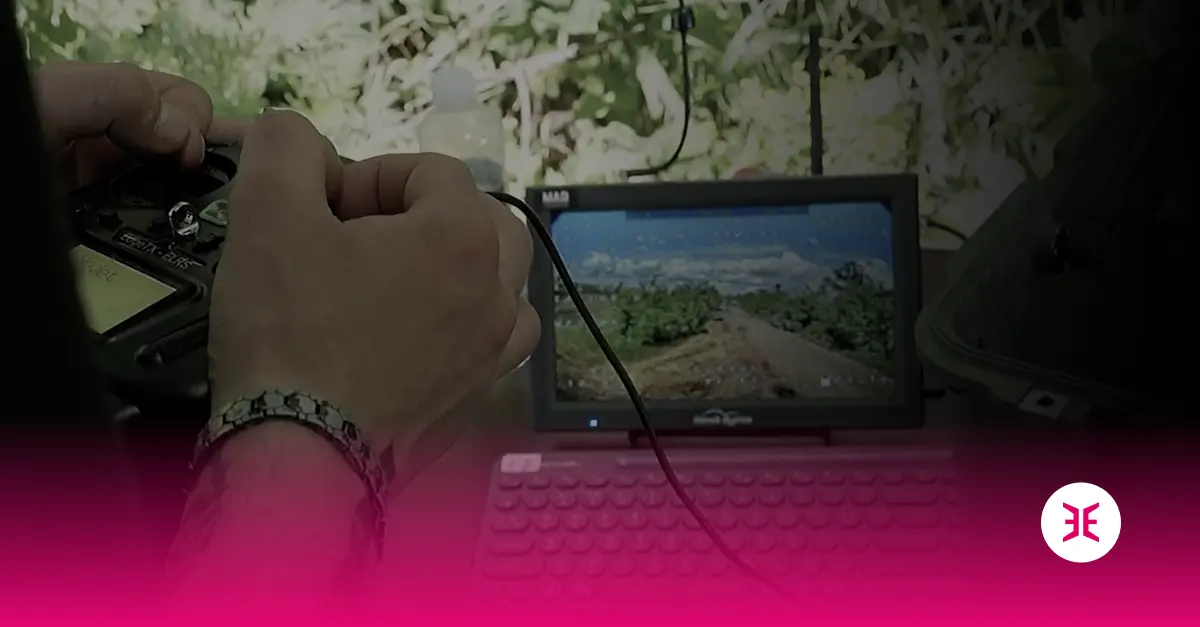
I was talking to a drone operator recently, a woman who has spent more hours than she can count guiding FPVs toward their targets, and I mentioned the phrase everyone in Ukraine seems to say now.
The drones should do the fighting, not people.
I expected her to nod along, but she pushed back.
“I get the point, I understand the idea behind it” she said, but there was something about the phrase bothered her. It sounded as if the drone was the one doing the work, and she was just… there, like a footnote. Press button, drone flies, mission happens. As if she wasn’t the one who’d trained for months, who was making split-second calls under pressure, who was the actual reason the mission succeeded or didn’t.
So which is it? Is the phrase right, or is she?
Both, actually. And figuring out why is worth the length of this article.
Part one: why the phrase exists at all
Anyone who was in Ukraine in 2022 remembers what the front looked like. Long columns advancing. Heavy artillery. A war that still resembled, in its shape, wars from a century before. That front doesn’t look the same anymore. It’s quieter on the ground and far busier in the air, threaded with the constant buzz of FPVs and reconnaissance drones doing work that used to require a person walking into range to do it.
That shift matters, because it means a choice that didn’t used to exist now does. When a machine can do reconnaissance, or hold a position under observation, or strike a target, that’s a job a person doesn’t have to do instead. Sending someone forward when a drone could have gone is no longer just a tactical call. It’s a moral one, and increasingly the wrong one to get wrong.
That’s what the phrase is actually protecting: the idea that human life shouldn’t be spent on tasks a system can absorb instead. Nobody serious is arguing against that.
Part two: the part the phrase leaves out
Here’s where the operator’s objection earns its place. Good, glad we cleared that up… except we haven’t, because the phrase quietly implies something false: that once the drone is doing the work, the human isn’t really doing anything anymore.
Ask anyone who’s actually flown one. It is not a video game. There’s no extra life, no reloading from a checkpoint, no infinite inventory of drones waiting in reserve. Every mission that fails is a mission that has to be replaced, rebuilt, re-flown, and on the frontline that cost is real in a way a game over screen never is. The margin for error is thin, and it’s the operator who’s managing it in real time.
So the responsibility doesn’t disappear when a human isn’t standing in front of the target. It moves. It moves upstream, into training, into judgement, into whoever is actually guiding that system, swarm or single unit, toward doing what it’s supposed to do. And that only works if three things are true:
There have to be operators trained to do this at all. Nothing about flying a drone well is default or automatic; it takes real instruction to get someone from “can operate the controls” to “can complete a mission that matters.”
Those operators have to be trained well, not just trained. The difference between adequate and excellent here shows up directly in whether the mission succeeds.
And those operators have to be protected. A platform can be replaced. Production can scale. A trained operator cannot be manufactured on the same timeline, and not everyone who tries can become one.
So who’s right?
Both of them. The phrase is right that drones should be the ones absorbing the risk that used to fall on people. The operator is right that this doesn’t make her invisible, it makes her indispensable. The point was never “let the machine take over.” It’s that the machine should take the exposure, while the person who’s actually making it work well gets protected, not diminished.
That’s the version of “human safety first” we build around at DK NEJET: not fewer humans in the story, but the right humans, kept out of the blast radius and treated as the asset they actually are.
The Next Decade’s Best Bet: Why Defense Tech Is the New Software
DK NEJET in Oslo – We’re Exhibiting at FSi Exhibition 2026
DK NEJET Group Hosts Latvian Minister of Defence

The Illusion of a Magic Button: Why Autonomy Alone Won’t Change the Battlefield