- DK NEJET
The Next Decade’s Best Bet: Why Defense Tech Is the New Software
Thesis: The market still prices defense like hardware. It’s wrong. The real value is shifting to software-defined, mass-producible systems—and the window to back this shift is open now.
For two decades, software company valuations tracked headcount. More engineers meant more billable hours. Headcount was the product. That model is breaking.
One specialist armed with the right AI stack now delivers what once required a team. The Stanford AI Index reports U.S. software developer employment (ages 22–25) is down nearly 20% versus 2024, with a third of employers expecting further AI-driven cuts.
IT won’t vanish. It will become infrastructure—the floor under every industry. The survivors will own something tangible: product, data, proprietary technology, or a specific customer problem. Firms selling only hours will face the most pressure.
The investors who captured the most value from AI didn’t wait for consensus. They deployed capital while it still sounded speculative. By the time a shift is common knowledge, the outsized returns are gone.
So the question that pays remains: Where is the next shift while it still sounds like a bet?
The Signal: Record Defense Spend, but a Deeper Inversion
Follow the serious money.
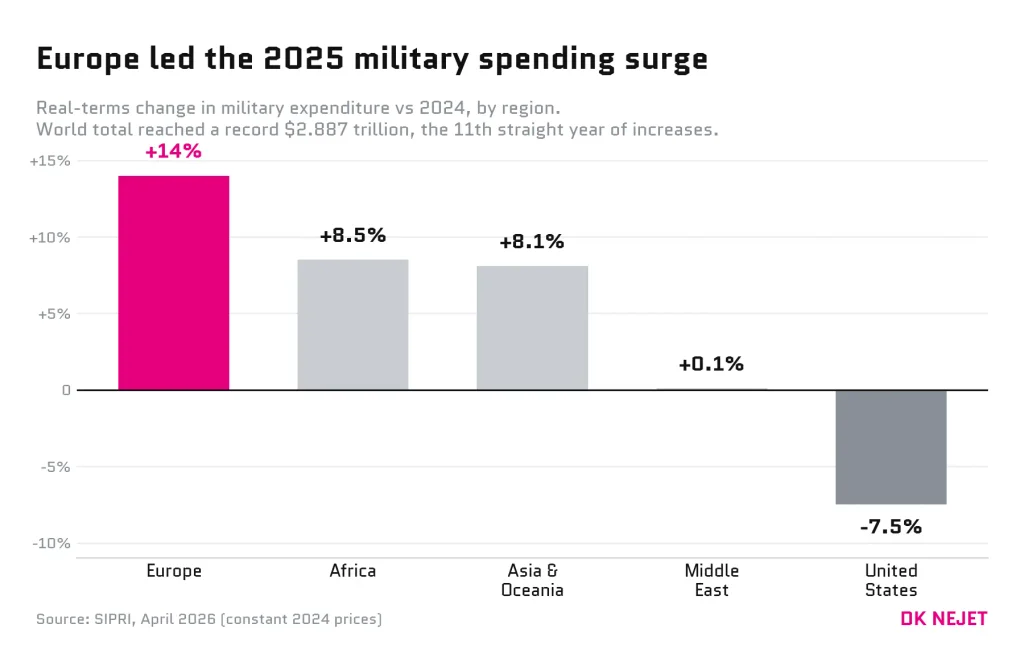
In 2025, global military spending hit a record $2.887 trillion—41% higher than a decade prior, per SIPRI. Europe alone grew 14% in a single year. NATO members have agreed to allocate 5% of GDP to defense and security by 2035 (The Hague Summit Declaration). The EU aims to mobilize up to €800 billion for rearmament and its defense industry (ReArm Europe Plan).
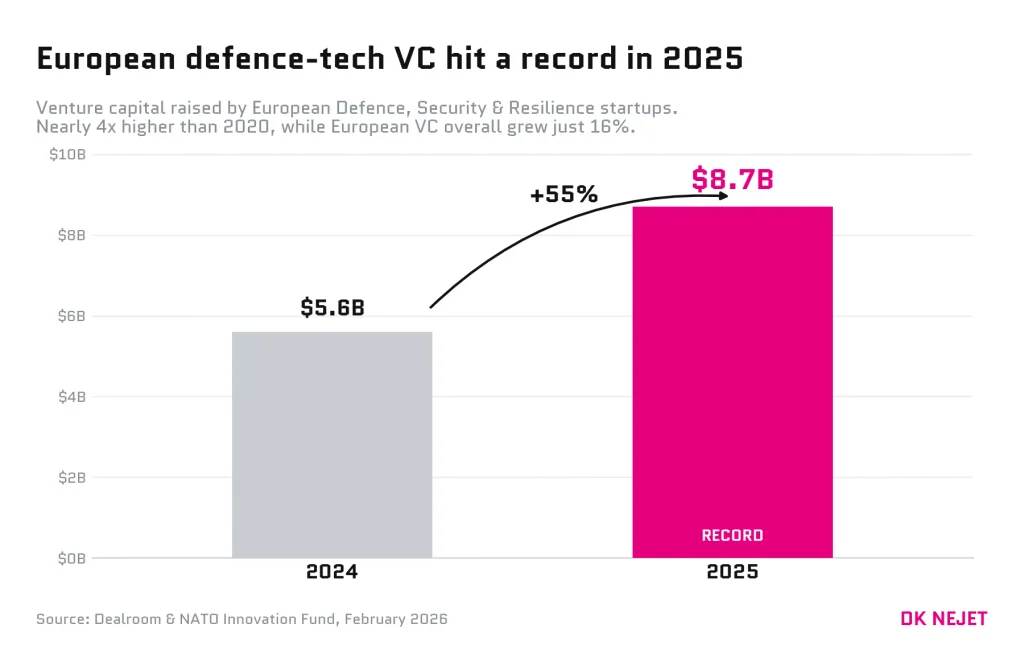
Investors noticed. In 2025, European defense, security, and resilience startups raised a record $8.7 billion in venture capital—55% more than the year before, according to Dealroom and the NATO Innovation Fund.
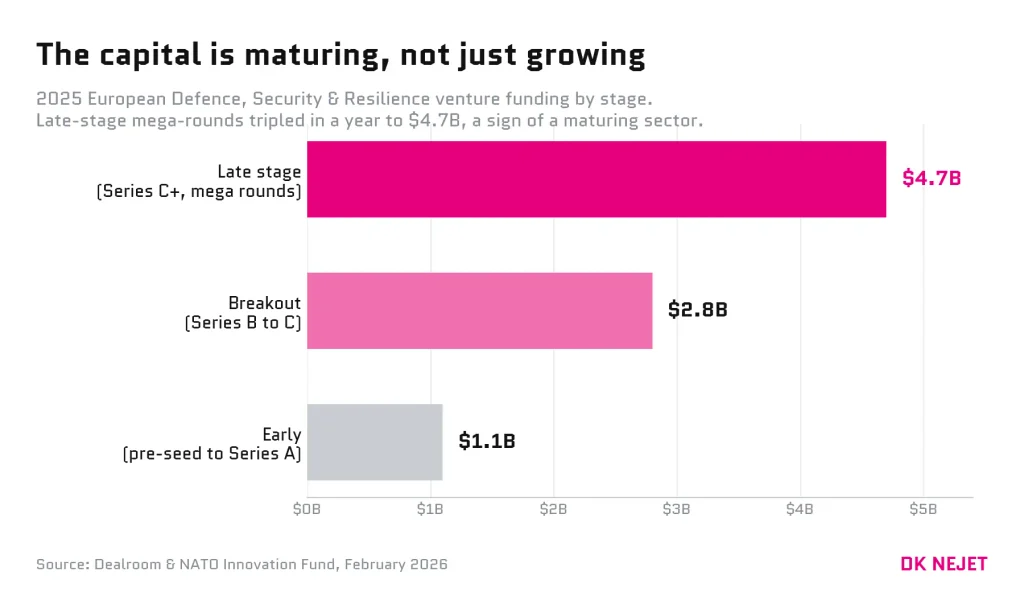
Big budgets alone are an old story. Governments have always spent on weapons. The bigger signal sits beneath the checks: the industry’s logic is inverting—and that is exactly when early capital wins.
The Old Logic, and Why It’s Breaking
For decades, military power resided in a handful of expensive platforms: jets, ships, tanks, air defense systems. Advantage went to whoever could build the most advanced unit, protect it, and train a small cadre to operate it – quality and firepower, concentrated in costly machines.
That held on one condition: a cheap weapon could not seriously hurt a system worth hundreds or thousands of times more.
Now it can. A machine costing a few thousand dollars can take out a platform worth millions. Sometimes the interceptor sent to stop one cheap threat costs many times more than the threat itself. When the numbers run that way, even a clean win can be a loss on the balance sheet.
For investors, this is the key: When an industry’s cost logic inverts, the incumbent’s advantage stops compounding, and value migrates. The expensive platforms don’t disappear. They simply stop being where new value is created. It settles instead into the cheap, coordinated, software-defined layer: algorithms, data, and the ability to launch, update, and replace at scale. Weapons are becoming software-defined—and software is where the last decade’s returns learned to compound.
That is the same shape of bet AI was a few years ago: a new logic, still early, with most of the market pricing the old one.
How to Spot a Real Defense-Tech Company (Not a Costume)
Money pouring into a category doesn’t mean it’s reaching the right companies. When a market runs this hot, the label starts doing the work the product should. Add “defense” to a deck, and the room leans in. So the useful question is narrower.
Start with one thing: Has the technology been used, or only shown? A clean demo on a range proves the hardware can fly. It says little about a jammed signal, a cold night, an operator who is exhausted and under real pressure. What has survived real conditions carries information a slide cannot fake.
Then ask about the trend, not the headline number: What did one confirmed result cost a year ago, and what does it cost now? A company that cannot bend that line downward is selling you today’s economics forever. The ones worth backing make each result cheaper as they grow.
Ask who builds it, and how many: What is the bottleneck between idea and 1,000 units, on time, at a price that still makes sense? The idea is rarely the hard part. Manufacturing is the boring thing that quietly decides who wins.
Look for the data that cannot be bought: Who gathers the messy, specific data that only real use produces, and feeds it back fast? That loop compounds. A pitch that leans on “AI” while owning no data of its own is a costume with a good tailor.
Watch the clock: Does the product improve on a software rhythm (weeks) or a hardware rhythm (years)? The threat picture moves on the short clock. A company that can only answer on the long one is already behind.
And notice how they talk about what is finished: Which parts are proven, and which are still maturing? The honest ones tell you plainly. The ones who let a working product lend credibility to an unfinished promise are telling you something—just not what they intended.
One more question, the uncomfortable one: What happens to this company if the threat it was built for fades? The sturdiest build capability that holds value in deterrence, in security, in protecting critical infrastructure—whatever any single situation does next. A business pinned to one moment is fragile.
None of this makes the rush safe. Hot money lifts valuations and funds plenty of costumes alongside the real thing. Some of the loudest names will not outlive their own noise. Rules on export and procurement can reshape a business overnight, and a market this political rarely moves in a straight line. Moving first earns the most—and also pays for everyone else’s mistakes.
Name the Shift Plainly
The next big one is defense. And it is happening in the least obvious place: in the doctrine itself. The rule for what wins is being rewritten—from expensive and few to cheap, many, and coordinated by software. IT went through exactly this once, and the people who read the new rule first and backed it with money first took the largest share of everything that came after.
Defense sits on that same line today. The window where this still sounds like a bet is the one that pays, and it is open now. The money has already arrived; the judgment to spend it well has not. That gap is where the next ten years will be won.
Sources
- Stanford Institute for Human-Centered AI, 2026 AI Index: https://hai.stanford.edu/news/inside-the-ai-index-12-takeaways-from-the-2026-report
- SIPRI, World Military Expenditure 2025 (press release, Apr 2026): https://www.sipri.org/media/press-release/2026/global-military-spending-rise-continues-european-and-asian-expenditures-surge
- NATO, The Hague Summit Declaration (25 Jun 2025): https://www.nato.int/en/about-us/official-texts-and-resources/official-texts/2025/06/25/the-hague-summit-declaration
- European Commission, ReArm Europe Plan / Readiness 2030 (European Parliament briefing): https://www.europarl.europa.eu/thinktank/en/document/EPRS_BRI(2025)769566
- Dealroom & NATO Innovation Fund, European Defence, Security & Resilience report 2025: https://www.nif.fund/news/dealroom-and-nato-innovation-fund-european-defence-security-resilience-startups-smash-record-with-8-7b-raised-in-2025/

DK NEJET in Oslo – We’re Exhibiting at FSi Exhibition 2026
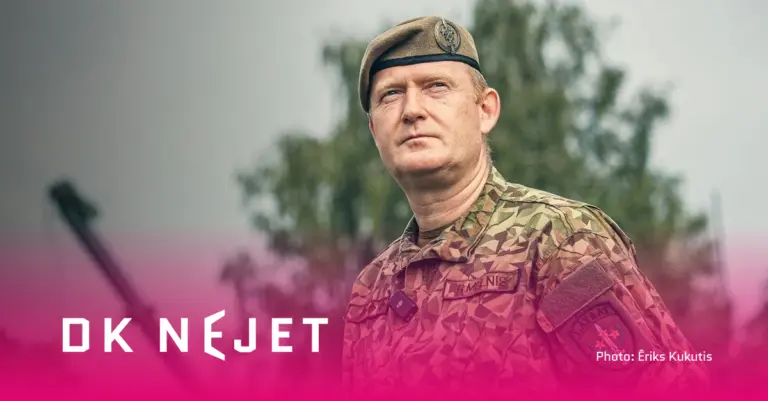
DK NEJET Group Hosts Latvian Minister of Defence

The Illusion of a Magic Button: Why Autonomy Alone Won’t Change the Battlefield
Ukraine’s defense-tech is ready to scale. Export rules aren’t.